You are not managing your life. You are serving that thing you built.
Every system has a maintenance cost. When the cost consumes the value, your productivity tool becomes a liability disguised as improvement. Learn to build systems that survive ordinary human exhaustion.
Read the Full Guide
Get Low-Maintenance Structures and learn how to build systems that support life without becoming another burden.
Get it on Payhip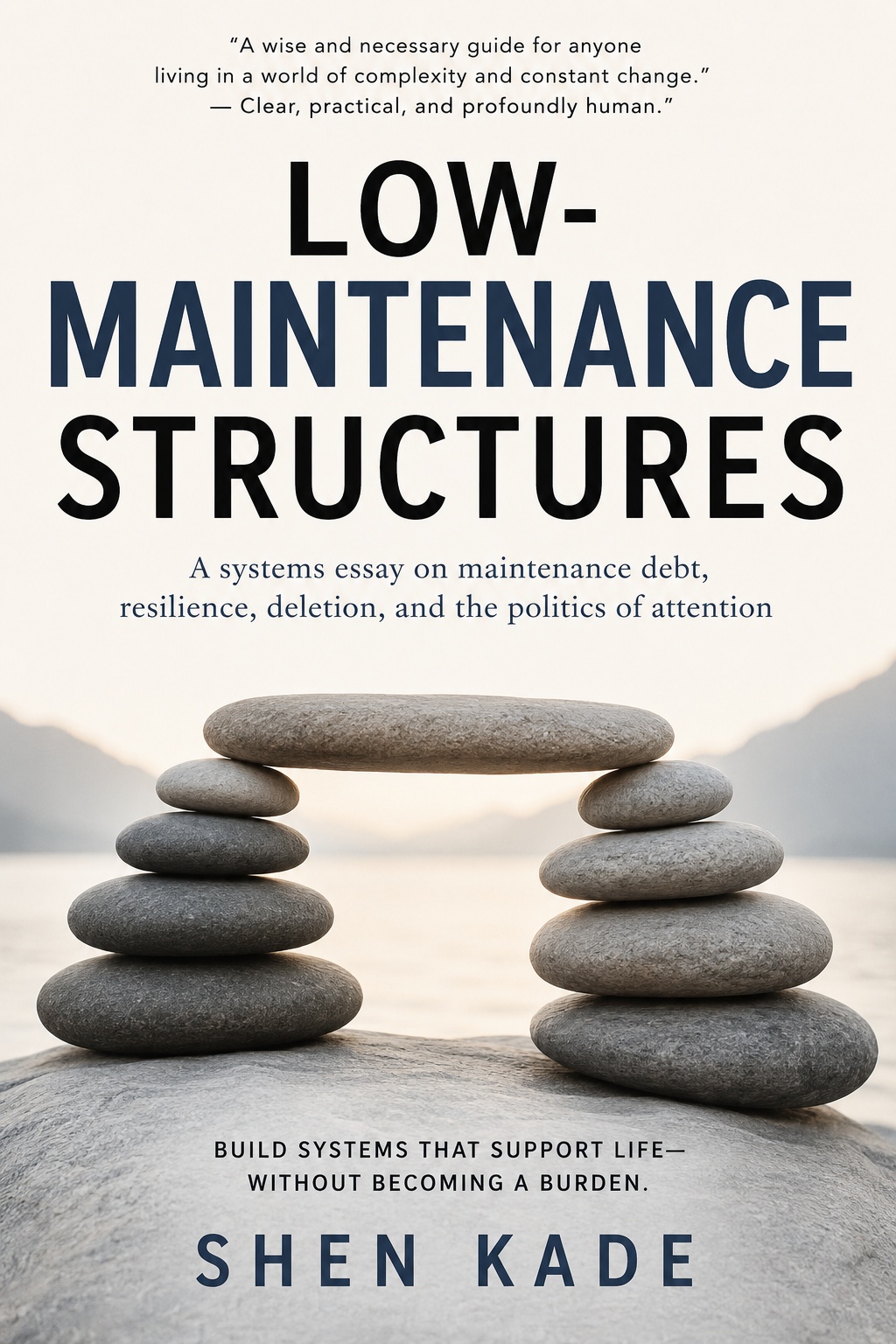
The hidden economy of modern management
We build dashboards, workflows, and rules to make life lighter. Then they slowly acquire an appetite.
The Invisible Workday
Spending 45 minutes every morning updating statuses, reorganizing digital folders, and configuring tools before doing any actual work. Keeping the support systems alive has become a second job.
Fear of the Dashboard
Hesitating to open your own task manager or budget tracker because it no longer functions as a map. It functions as a judgment wearing ninety-seven overdue red badges.
The Sunk-Cost Captivity
Defending exhausting, complex systems because "we already built it," allowing yesterday's cleverness to become today's continuous attention tax.
"A structure should be judged not by what it can do on its best day, but by what it demands on an ordinary day."
Build for ordinary neglect and human limits
How to structure your work, portfolio, and routines so they can survive real life.
Build Parts That Can Leave
Limit the blast radius of change. Ensure one tool, process, or routine can fail or disappear without dragging your entire operational model into a multi-day crisis.
Protect the Promise, Loosen the Method
Keep your interfaces stable and your implementations flexible. Sunday dinner is an interface; takeout or home cooking is an implementation. Never confuse the goal with the tool.
Soft Re-entry Over Rigid Consistency
Resilient structures assume breakage. A good system does not demand emotional heroism or a ritual of repentance when you return after two weeks of neglect. It lets you walk right back in.
The Discipline of Deletion
Stop granting maintenance rights to structures that do not repay your attention. Low maintenance is recursive fuel: the less you upkeep, the more surplus intelligence you release.
Continue through Build Assets
Read the adjacent books in the Build Assets sequence.
Previous book Next book